How to Get Through Stadium Security Faster: Skip the Bag Check
Share
How to Get Through Stadium Security Faster: Skip the Bag Check
Quick answer: The single fastest way to get through stadium security is to not carry a bag. Most major stadiums have dedicated no-bag lanes that move 2-3x faster than bag-check lines. Distribute your essentials across your pockets and a wearable stash pocket like a bandana with a hidden zipper, and you will be at your seat while bag-carriers are still inching through the inspection line.
Why Stadium Security Takes So Long
Before we fix the problem, let's understand it.
Stadium security exists in a constant tension between two goals: thoroughness and speed. Venues need to screen tens of thousands of people in a window of roughly 60-90 minutes before an event starts. Every bag that needs to be opened, inspected, and re-closed adds time to the process.
Here is the rough math. At a typical NFL game with 70,000 attendees, each security gate processes about 500-800 people per hour. If half of those people have bags, and each bag inspection takes an additional 15-30 seconds compared to a no-bag screening, you are looking at significant bottlenecks.
That is why the no-bag lane exists. Venues figured out that separating the bag-carriers from the non-bag-carriers dramatically improves overall throughput. The no-bag lane is faster because:
- There is nothing to open and inspect
- Metal detector or wand screening takes the same time regardless
- Fewer people use it (most people still bring bags)
- The people in it tend to be experienced event-goers who know the drill
The No-Bag Strategy: A Step-by-Step Guide
Going bag-free is not just about leaving your bag at home. It requires a small amount of planning so you do not end up at the stadium without something you need.
Step 1: Identify Your Actual Essentials
Before your next event, take everything out of the bag you would normally bring. Separate it into three piles:
Must have: Phone, ID, payment card, keys, tickets (usually on your phone).
Nice to have: Cash, ear plugs, lip balm, gum, small meds (ibuprofen, allergy pills), portable charger.
Do not actually need: Full wallet, makeup bag, extra layers, snacks (you can buy them inside), water bottle (most stadiums prohibit them anyway), sunglasses case (wear them or leave them).
Most people are surprised by how small the "must have" pile is. The "nice to have" pile is also pretty manageable once you strip it down.
Step 2: Set Up Your Carry System
You have got roughly 8-12 small items to distribute. Here is how:
Front left pocket: Phone.
Front right pocket: Car key or fob, house key. Minimized keyring — leave the rest in the glove compartment.
Back pocket or phone case: ID and one payment card.
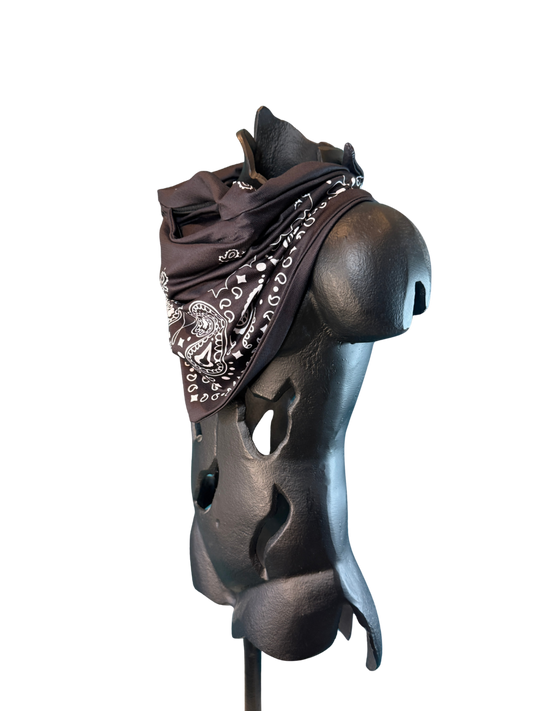
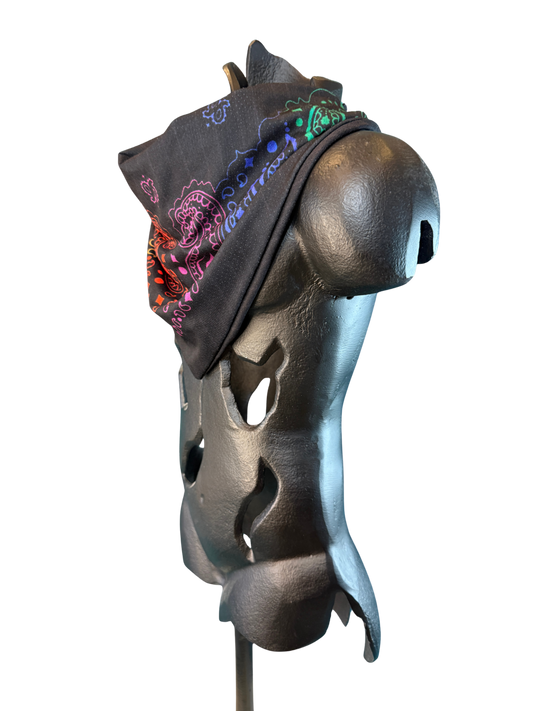
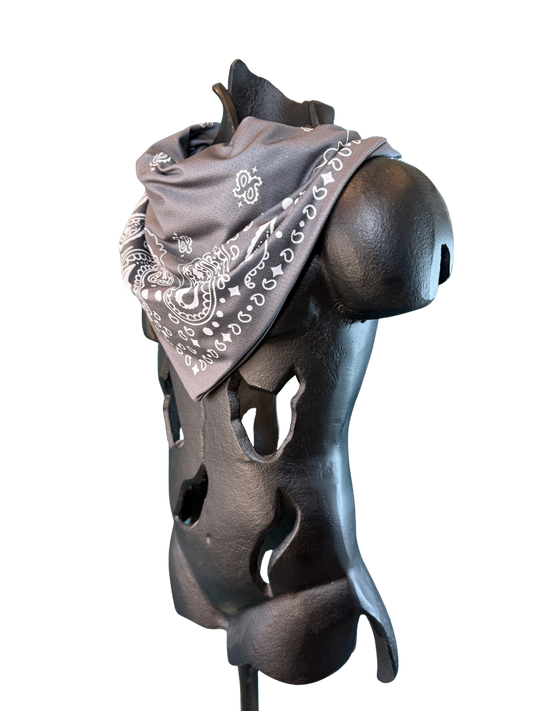
Wearable stash pocket: Everything else. A Stuffy Fox bandana with a hidden zippered pocket handles ear plugs, cash, lip balm, a few pills, and a slim portable charger easily. Tie it around your neck, your wrist, or your head, and it reads as an accessory, not a storage solution.
Step 3: Arrive at the Right Time
Even with the no-bag approach, timing matters. Here are the windows:
Too early (90+ minutes before): Gates might not be open. You will stand around in a parking lot.
Sweet spot (60-75 minutes before): Gates are open, lines are short, you have time to find your seat, grab food, and settle in.
Cutting it close (30-45 minutes before): Lines are building. You will still beat the bag-check crowd, but the no-bag lane gets busier as kickoff approaches.
Late (under 30 minutes): Peak congestion. Even the no-bag lane has a wait. You might miss the opening.
Step 4: Know Which Gate to Use
Not all gates are equal. Here are some insider tips:
- Corner gates and side gates are almost always less crowded than main entrances.
- Gates near premium seating sometimes have shorter lines because fewer people use them (though they may check your ticket section).
- Gates farthest from parking areas tend to be quieter because most people walk to the closest entrance.
- Many stadiums publish real-time gate wait times on their apps. Check before you walk up.
Step 5: Be Ready Before You Reach the Front
This sounds obvious, but watch the security line at any stadium and you will see half the people fumbling for their phone, digging for their ticket, or emptying their pockets when they reach the front.
Have your ticket pulled up and visible on your phone screen before you get in line. Know which pocket everything is in. Remove any metal items (keys, coins) and hold them in your hand if the venue uses a walk-through metal detector. The goal is zero hesitation when it is your turn.
How No-Bag Lanes Actually Work
If you have never used a no-bag lane, here is what to expect:
- Approach the gate. Look for signage that says "No Bags," "Express Lane," or "Clear Entry." At NFL stadiums, these are clearly marked. At other venues, ask a staff member.
- Ticket scan. Same as any other lane. Show your digital or physical ticket.
- Metal detector. Walk through the detector or stand for a wand scan. This takes about 5 seconds.
- Possible pat-down. Some venues do a quick pat-down even in the no-bag lane. This takes about 10 seconds.
- You are in. Total time from the front of the line to inside the venue: 15-30 seconds.
Compare that to the bag-check lane, where each person's inspection can take 30-60 seconds — and multiply that by every person ahead of you.
Stadium Security by Venue Type
Different venues handle security differently. Here is what to expect.
NFL Stadiums
The most standardized security of any venue type. Clear bag policy is universal. No-bag lanes are available at every NFL stadium. Metal detectors (usually walk-through) are standard. Some stadiums have started using "frictionless" screening technology that allows you to walk through at normal speed without stopping.
Pro tip: Many NFL stadium apps show gate wait times and have maps showing which entrances have the shortest lines. Download your team's app before game day.
MLB Ballparks
Security is generally less intense than NFL games. Metal detectors are standard, but some parks still do visual bag inspections rather than full searches. Bag policies vary by park — some mirror the NFL clear bag rule, others just limit bag size.
MLB games also have a more relaxed arrival pattern. People trickle in over a longer window, which means less concentrated congestion.
NBA and NHL Arenas
Arenas are smaller than stadiums, which means fewer gates and potentially longer per-gate lines despite lower total attendance. Most arenas enforce bag restrictions and offer no-bag express lanes. Because seating is more compact, getting in quickly actually matters more — navigating to your seat in a packed concourse during warmups is no fun.
Concert Venues (Arenas and Amphitheaters)
Concert security can be unpredictable. It depends heavily on the artist, the venue, and the promoter. Some shows have airport-level screening. Others wave you through with a quick glance.
The constant: no bag is always faster than any bag. Even when security is light, skipping the bag check saves time.
College Stadiums
NCAA venues vary wildly. Some major programs have NFL-quality security infrastructure. Smaller programs might have a handful of security staff checking bags by hand. Clear bag policies are common at Division I football games.
College stadiums often have fewer gates relative to their capacity, which makes the no-bag lane advantage even more significant.
What About Metal Detectors?
Metal detectors are the great equalizer — everyone goes through them regardless of bag status. Here is how to make that step as smooth as possible:
- Empty metal from your pockets before you reach the front. Keys, coins, lighters, belt buckles — hold them in your hand.
- Your phone usually does not set off the detector. But if it does, just hold it up and show the screener.
- Belt buckles are the most common culprit for false alarms. If you wear a big buckle, be ready to show it.
- Bandanas, hats, and fabric accessories do not trigger detectors. A Stuffy Fox bandana with a metal zipper might occasionally cause a quick look, but the zipper is small and security staff see these constantly. One flash of the pocket and you are through.
Advanced Stadium Entry Strategies
For the event veterans who want to optimize every minute.
The Split Strategy
Going with a group? Have one person carry everyone's essentials in a clear bag while everyone else goes through the no-bag lane. The bag carrier meets the group inside. Works especially well at NFL games where one person can carry the group's stuff in a single clear bag.
The Pre-Game Pocket Setup
Treat your pockets and wearable storage like a loadout. Same items, same positions, every single game. When it becomes muscle memory, you move through security on autopilot.
Here is one tried-and-true setup:
- Phone: front left pocket
- Keys: front right pocket
- Card and ID: phone case
- Cash, ear plugs, extras: Stuffy Fox bandana pocket
Every game. Every concert. No thinking required.
The App Check
Most major venue apps now include:
- Gate wait times (sometimes with heat maps)
- Prohibited items lists (updated for specific events)
- Parking lot maps with walking routes to specific gates
- Mobile ordering for food so you can skip concession lines too
Check the app 30 minutes before you leave for the venue. It takes 60 seconds and can save you 30 minutes.
The Re-Entry Question
Some venues allow re-entry; most do not. If re-entry is not allowed and you left something in your car, you are out of luck. Another reason to keep your carry minimal and on your body — there is nothing to forget, nothing to go back for.
Common Security Mistakes (And How to Avoid Them)
Bringing a prohibited bag. Always check the specific venue's bag policy before you go. Policies change from season to season and sometimes from event to event. Getting turned away and having to walk your bag back to the car is a 20-40 minute detour.
Forgetting what is in your pockets. That pocket knife on your keychain? The small multi-tool you forgot about? Security will confiscate them and you will not get them back. Do a full pocket check before you leave home.
Holding up the line. Ticket not ready, pockets full of metal, arguing about a policy. Do not be that person. Prepare before you get to the front.
Using the wrong entrance. Main gates near the parking garage will always be the busiest. Walk an extra two minutes to a side gate and save fifteen.
Arriving during peak. The 30-minute window before an event starts is the worst possible time to arrive. The sweet spot is 60-75 minutes before.
The Math on Time Saved
Let's put some rough numbers on this.
Average wait in bag-check lane at an NFL game (60 min before kickoff): 15-25 minutes.
Average wait in no-bag lane at the same time: 3-8 minutes.
Savings per game: 10-20 minutes.
Over a full NFL season (8-10 home games plus playoffs): 80-200 minutes — that is up to three and a half hours of your life not spent standing in a security line.
For concerts, the math is similar. For music festivals with multi-day passes, the cumulative savings are even bigger.
What Security Staff Actually Care About
Having talked to dozens of venue security professionals, here is what they are really screening for:
- Weapons. This is the primary concern. Always.
- Prohibited items. This varies by venue but typically includes outside food/drink, professional cameras, large bags, and anything on their specific prohibited list.
- Behavior. Security staff are trained to watch for erratic behavior, visible intoxication, and confrontational attitudes. Being calm and cooperative gets you through faster.
What they generally do not care about:
- Your bandana, whether it has a pocket or not
- Ear plugs, lip balm, gum, or small personal items
- The small amount of cash in your pocket
- How many times you have been to the venue before
Be polite, be prepared, and keep it simple. That is the whole game.
The Bottom Line
Stadium security is not going to get less intense. The technology is evolving — better scanners, faster screening systems, biometric ticketing — but the fundamental bottleneck is the same: bags take time to check.
The fastest, simplest, most reliable way to get through security at any stadium, arena, or concert venue is to eliminate the bag entirely. Figure out what you actually need, distribute it between your pockets and a wearable option like a Stuffy Fox bandana, and walk straight through the express lane.
You will be at your seat with a drink in your hand while everyone else is still showing a security guard the inside of their clear plastic bag. And honestly? That is a pretty great way to start any event.