How to Keep Your Stuff Safe at the Beach (Without Stressing All Day)
Share
How to Keep Your Stuff Safe at the Beach (Without Stressing All Day)
Quick answer: The safest approach at the beach is to bring as little as possible, leave important valuables at your hotel, and use a combination of wearable storage (like a waterproof pouch or bandana with a hidden pocket) and visual deterrents for whatever you do bring. The goal isn't a Fort Knox setup — it's making your stuff less attractive and less accessible than the next person's.
There's a specific kind of anxiety that hits when you're standing knee-deep in the ocean, looking back at your towel 50 meters away, thinking: "Is my stuff still there?"
It's the worst. You're supposed to be relaxing. The water is perfect. The sun is doing its thing. But instead of being present, you're running mental inventory on your belongings and scanning the beach for suspicious characters like a low-budget spy.
Beach theft is real — it happens everywhere from Barceloneta to Bondi to the beaches of Bali. But it's also extremely preventable. The trick is having a system, so you can actually enjoy the water without that nagging voice in the back of your head.
Let's build that system.
Why Beaches Are a Hotspot for Theft
It helps to understand what makes beaches uniquely risky compared to, say, a cafe or a museum.
Everyone Leaves Their Stuff Unattended
At no other point during your trip do you voluntarily walk away from your belongings and leave them sitting out in the open. The beach is the one place where this is completely normal — and thieves know it.
Minimal Witnesses
People at the beach are relaxed, distracted, wearing sunglasses, facing the water, half-asleep, or reading. Nobody is watching your stuff. A thief can walk past your towel, grab a bag, and keep walking without a single person noticing.
Easy Escape Routes
Most beaches have multiple exits, nearby streets, and crowds to blend into. By the time you notice something is missing and get out of the water, a thief has a massive head start.
You're Carrying Less Protection
No zipped bags strapped to your body. No jacket with inside pockets. At the beach, your stuff is just... out. Often in an open tote bag sitting on a towel. It doesn't get easier than that for someone looking to steal.
Step 1: Leave Most of It at the Hotel
This is the most important strategy, and the one most people skip. Before you head to the beach, ask yourself: do I actually need this?
What to Leave Behind
- Passport. There is almost zero reason to bring your passport to the beach. Leave it in the hotel safe. If you need ID, bring a photocopy or a photo on your phone.
- Extra credit/debit cards. Bring one card. Leave the rest locked up.
- Large amounts of cash. Bring enough for lunch, a couple drinks, and maybe a beach umbrella rental. That's it.
- Expensive jewelry. Just... no.
- Your laptop or tablet. It sounds obvious, but people bring these to beaches more than you'd think.
What You Actually Need
For a standard beach day, your real essentials are:
- Room key or key card
- One credit/debit card or a small amount of cash
- Phone (if you want photos — but consider whether you really need it)
- Sunscreen, towel, water, book
That's it. The less you bring, the less you can lose, and the less you have to worry about.
Step 2: Use Wearable Storage for the Non-Negotiables
Even after trimming down, you'll still have a few things you can't leave behind — your room key, at minimum, and probably a card and some cash. The question is: what do you do with those when you're in the water?
The Wearable Solution
The best answer is to take them with you. Not in your swimsuit pocket (things fall out, get waterlogged, and you'll feel them banging against your leg). Instead, use wearable storage that stays on your body.
Waterproof phone pouches work for your phone — you can wear them around your neck in the water. They're cheap and widely available.
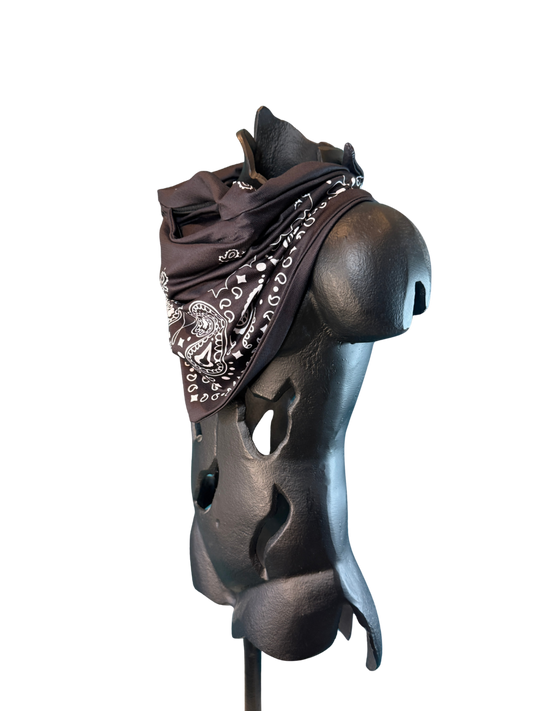
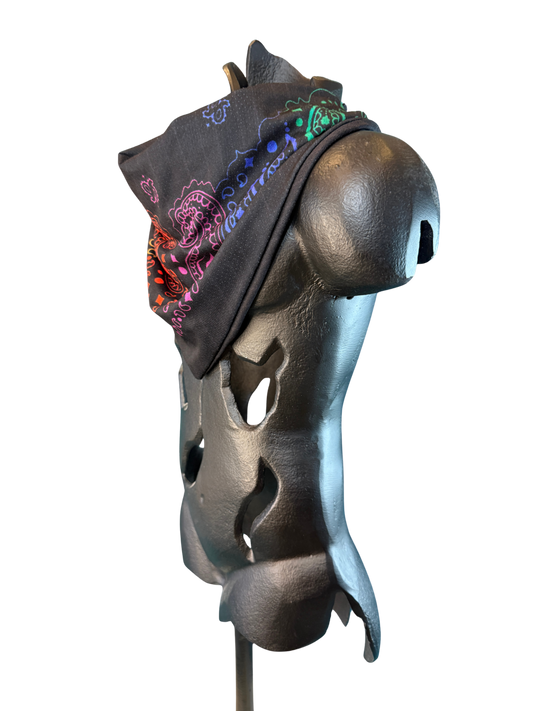
For everything else — the room key, a folded bill or two, a credit card — a bandana with a hidden zippered pocket is genuinely one of the best options out there. Tie it around your wrist, your head, or your neck, and your essentials are on your body the whole time. No bag left on the towel to worry about. The Stuffy Fox bandana was literally designed for this kind of situation — the stash pocket holds a card, key, and cash, and it's completely invisible. You just look like someone wearing a bandana at the beach, which is... everyone.
Why This Beats Other Options
- Money belts — uncomfortable, look weird under swimwear, and most aren't water-friendly.
- Leaving it in your shoe — the first place a thief checks. Seriously, they know this trick.
- Burying it under your towel — also extremely well-known. Plus, sand gets in everything.
- Asking a stranger to watch your stuff — you're trusting a person you've never met. Fine in some contexts, but not a strategy.
Step 3: Make What's Left Less Appealing
For things that can't go in the water with you — like a book, sandals, sunscreen, or a larger bag — you want to make your setup look as uninteresting as possible to anyone scanning the beach.
The "Nothing Worth Stealing" Setup
- Use a beat-up bag. Your nice leather tote screams "tourist with money." A ratty canvas bag or a reusable grocery bag says "nothing valuable in here." Perception matters.
- Don't leave electronics visible. If you brought your phone and aren't taking it in the water, bury it inside a towel inside your bag. Out of sight, out of mind.
- Spread out among other groups. Set up near families or large groups. More eyes around, and thieves prefer isolated targets.
- Cover everything with your towel. Drape your towel over your bag before heading into the water. It doesn't scream "valuable stuff under here" the way a zipped bag sitting alone does.
The Beach Lockbox Option
Portable beach safes exist — small lockboxes with cable locks that attach to your beach chair or umbrella. They're not foolproof (someone with determination and time can break into anything), but they add enough friction that a thief will likely move on. If you're spending multiple days at the beach and want an extra layer of security, they're worth the $25-40 investment.
Step 4: Choose Your Spot Strategically
Where you set up on the beach matters more than you think.
Best Spots for Security
- Near the lifeguard stand. More foot traffic from staff, more visible, less appealing for theft.
- Close to the water, but not too close. You want to be able to see your stuff from the water. If you're 100 meters back under a tree, you can't see anything.
- Near other groups. Isolation is a thief's best friend. Crowded areas have more witnesses.
- Away from easy exit points. If your towel is right next to a stairway to the street or a pathway through the dunes, someone can grab and vanish. A thief has to think about escape routes — make theirs longer.
Spots to Avoid
- Edges of the beach near exits or parking lots. Quick grab-and-go territory.
- Isolated corners. Beautiful for sunbathing, risky for belongings.
- Right next to the boardwalk or promenade. High foot traffic from people who aren't beachgoers and may be scanning for opportunities.
Step 5: The Buddy System and Social Solutions
If you're traveling with friends or a partner, you have a built-in security system.
Take Turns
One of you swims, the other stays. Then switch. Simple, effective, and you both get to enjoy the water without stress.
Befriend Your Neighbors
This isn't the same as "asking a stranger to watch your stuff" (which is risky). But if you've been chatting with the family next to you for an hour and have established some rapport, casually mentioning "hey, we're going to swim for a bit — yell if anyone messes with our stuff" is reasonable. Most people are happy to keep a casual eye out.
Solo Travelers — Your Options
Traveling solo makes beach security trickier, but not impossible. The wearable storage strategy becomes even more important. Take your key and card on your body, leave nothing valuable on the towel, and you're covered. A Stuffy Fox bandana honestly solves this problem completely for solo travelers — your critical items are physically on you, and everything left on the towel is stuff you could replace for under $20.
Beach-Specific Scenarios (and What to Do)
The Day Trip Beach
You might have more stuff — a change of clothes, maybe a bigger bag. Use a lockbox for your key items, or find a locker facility if the beach has one. Many popular tourist beaches in Europe and Southeast Asia have locker services for a few dollars.
The Party Beach
Full moon parties, beach bars, high energy. This is where theft spikes. Alcohol makes you less aware, and the chaotic environment provides cover. Bring absolute minimums — one card, a bit of cash — and keep them on your body. This is not the time for the "leave my bag on the beach" approach.
The Remote Beach
Less theft risk, but also zero infrastructure. No lockers, no lifeguards, nobody around. Take everything with you if you go in the water, because if something does get taken, you have no recourse and no help.
The Resort Beach
Generally safer because access is restricted and staff are around. But don't get complacent — resort beaches still see theft, often from other guests. Use the same precautions, just with slightly less intensity.
What to Do If Your Stuff Gets Stolen at the Beach
Immediate Steps
- Alert lifeguards and any beach staff. They may have seen something, and some beaches have security cameras.
- Check the surrounding area — sometimes thieves grab a bag, take the valuables, and dump the bag nearby.
- Call your bank to freeze any stolen cards.
- File a police report if anything significant was taken. You'll need this for insurance claims.
Prevention for Next Time
If you got hit, take it as a lesson. Almost every beach theft story follows the same pattern: "I left my bag on the towel and went swimming." The fix is simple — don't leave anything worth stealing unattended.
The Beach Day Packing List (Optimized for Security)
Here's what your ideal, low-stress beach kit looks like:
- On your body (wearable storage): Room key, one card, small amount of cash. Bandana with hidden pocket or waterproof pouch.
- In your bag (replaceable items only): Towel, sunscreen, water bottle, book or magazine, cheap sunglasses, snacks.
- Left at hotel: Passport, extra cards, large cash, electronics you don't need, jewelry.
That's it. That's the system. If someone grabs your bag while you're swimming, you lose a towel and some sunscreen. Annoying? Sure. Trip-ruining? Not even close.
The Bottom Line
Beach days should be about relaxation, not about running a personal security operation. The key is front-loading your preparation — leave the right stuff at the hotel, carry your essentials on your body, set up in a smart spot — so that once you're there, you can actually let go and enjoy it.
The ocean is calling. Go swim. Your stuff will be fine.