How to Hide Money When Traveling: 10 Clever Methods
Share
How to Hide Money When Traveling: 10 Clever Methods
Quick answer: The best way to hide money when traveling is to split it across multiple locations — some on your body in hidden storage, some in your luggage, and some back at the hotel. Never keep all your cash and cards in one spot. The most effective hiding methods are wearable and inconspicuous, like bandanas with hidden pockets, inside pockets sewn into clothing, or thin money belts under your shirt.
There's a reason every experienced traveler has a "money hiding" strategy. It's not paranoia — it's math. If all your money is in one place and that one place gets stolen, you're stranded in a foreign country with nothing. If your money is spread across four locations and one gets compromised, you lose 25% and move on with your trip.
The game isn't making your money impossible to steal. It's making sure losing some of it doesn't ruin everything.
Here are 10 methods that actually work, ranging from dead simple to genuinely clever.
The Cardinal Rule: Split Everything
Before we get into specific methods, this is the principle that underpins all of them: never keep all your eggs in one basket.
Here's a practical split for a two-week international trip:
- On your body (daily carry): One card + enough cash for the day
- In your day bag: A backup card + a small amount of emergency cash
- In your hotel safe: Passport + extra cards + majority of cash
- Hidden in your luggage: Emergency stash — a $50 bill and a photocopy of your passport
If any one of those locations gets hit, you have three others to fall back on. That redundancy is worth more than any single hiding method.
Method 1: The Bandana Stash
Difficulty: Easy
Concealment level: Excellent
Best for: Daily carry, nights out, beach days
This one has become our go-to recommendation because it solves the core problem perfectly: where do you put cash and a card when you don't want to carry a bag and don't want to use a money belt?
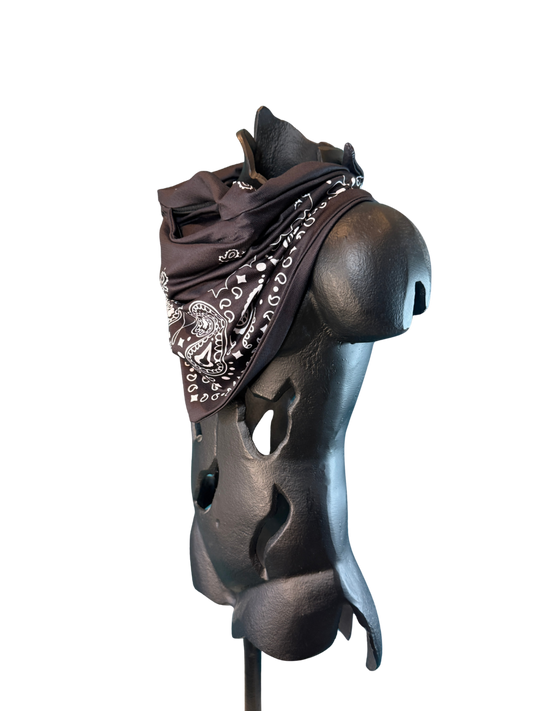
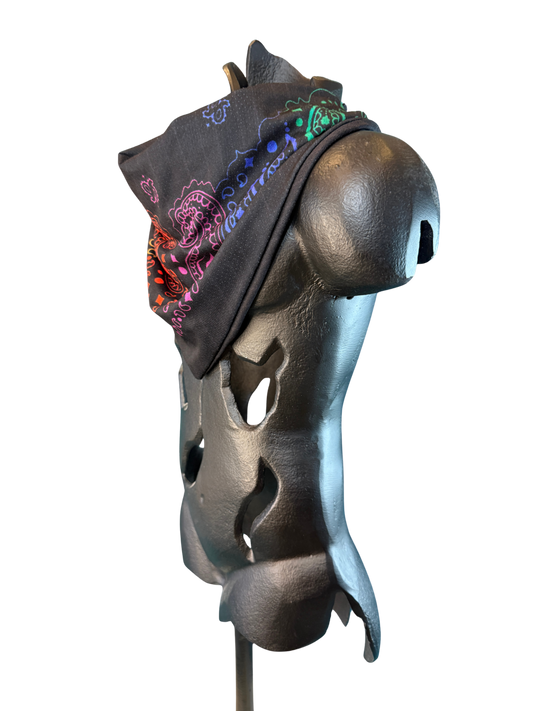
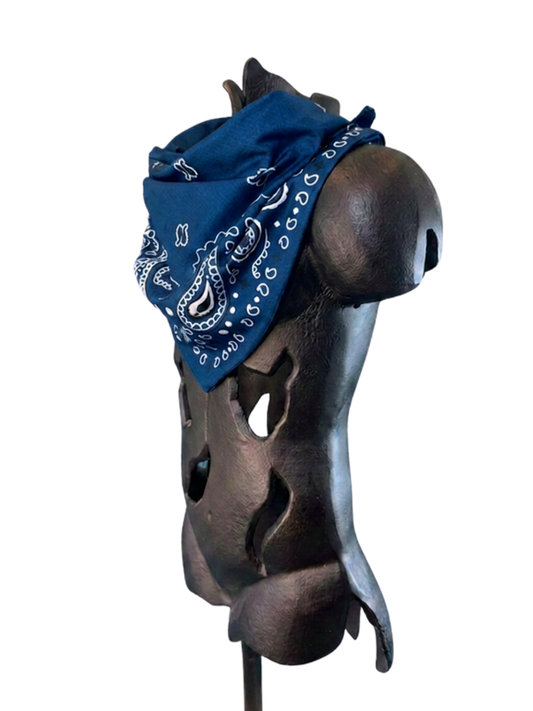
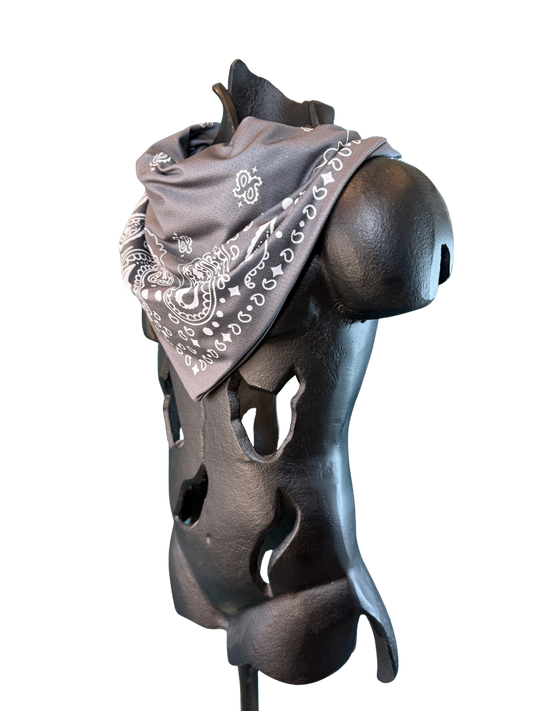
A bandana with a hidden zippered pocket — like the one from Stuffy Fox — looks like a totally normal accessory. Tie it around your neck, your wrist, or your head, and you've got a concealed compartment that holds folded bills, a credit card, and a room key.
Why this works so well:
- Nobody suspects a bandana. It reads as a fashion choice, not a security device.
- It's comfortable in any climate, unlike money belts that trap heat against your skin.
- Access is instant. No digging through layers or finding a bathroom.
- At $35, it's cheaper than most anti-theft accessories.
The limitation is size — you're not fitting a passport or a phone in there. But for the "walking around money" that you need on your body at all times, it's the most elegant solution we've found.
Method 2: The Decoy Wallet
Difficulty: Easy
Concealment level: N/A (it's about misdirection)
Best for: Cities with pickpocket risk
The decoy wallet isn't about hiding money — it's about giving a thief something to find so they stop looking.
Take an old wallet. Put $10-20 in local currency inside, along with an expired card or two. Keep it in your back pocket or an easily accessible part of your bag — the place a pickpocket would check first.
Your real cards and cash? Hidden somewhere else entirely.
If you get pickpocketed, the thief gets the decoy. They think they've scored, they walk away, and your actual money is untouched. You're out $20 and an expired Costco card. The thief got played.
Pro tip: Put a note inside the decoy wallet that says something like "Nice try." Optional, but deeply satisfying.
Method 3: The Inside-Clothing Pocket
Difficulty: Easy (if buying) / Medium (if sewing)
Concealment level: Very good
Best for: Daytime exploring, transit, anywhere
Several clothing brands now make travel pants, shorts, and jackets with hidden interior zippered pockets. These are different from the regular pockets — they're usually accessed through a slit inside the waistband or behind an interior flap.
You can also add your own. A basic sewing kit and 10 minutes gives you a hidden pocket inside the waistband of any pants. If you can sew a straight line, you can do this.
Best ready-made options:
- Clothing Arts pickpocket-proof pants (multiple hidden zipper pockets)
- Scottevest jackets (insane number of hidden pockets — some models have 20+)
- Any travel pants with an interior security pocket
The downside: these tend to look like "travel clothes," which can mark you as a tourist. The ideal is finding pants that look completely normal but happen to have a hidden pocket.
Method 4: The Luggage False Bottom
Difficulty: Medium
Concealment level: Good
Best for: Hotel room / emergency stash
Most suitcases have a lining you can partially lift. Slip an envelope with emergency cash ($50-100 and a photocopy of your passport) underneath the lining, then lay the lining back flat. A thief who rifles through your luggage is grabbing electronics, visible cash, and anything obviously valuable. They're not methodically deconstructing your suitcase's lining.
You can also use a flat money pouch specifically designed to sit between the lining and the shell of your luggage. These cost about $5 and work well.
Important: This is for your emergency stash, not your daily cash. If you're digging into your suitcase lining for bus fare, you're doing it wrong.
Method 5: The Toiletry Bag Fake-Out
Difficulty: Easy
Concealment level: Very good
Best for: Hotel room storage
Roll up some bills and put them inside an empty lip balm tube, a sunscreen bottle, or a tampon applicator (yes, really — it's one of the best hiding spots because most thieves won't touch it). Place it in your toiletry bag with your other products.
A thief tossing your hotel room is looking for wallets, electronics, and anything valuable sitting out in the open. They're not unscrewing every bottle in your toiletry kit.
Other good toiletry bag hiding spots:
- Inside a rolled-up sock in your luggage (classic but effective)
- In an empty medication bottle
- Inside a glasses case with your actual glasses on top
The theme: put money inside boring everyday objects that nobody would think to open.
Method 6: The Money Belt (Done Right)
Difficulty: Easy
Concealment level: Good to excellent
Best for: Airport days, long transit, carrying passport
Money belts get a bad reputation, and some of it is deserved — they're sweaty, uncomfortable, and awkward to access. But there are situations where they're the right tool:
- Long travel days where you're carrying your passport between cities
- Airports and bus stations where you've got everything on you
- Countries where you need to carry your passport by law
The key to wearing one well:
- Get a silk or moisture-wicking one, not nylon. The comfort difference is massive.
- Wear it below your waistline, not at belly-button level. It's less visible and less uncomfortable.
- Don't constantly touch or adjust it. The "adjustment tell" is a dead giveaway.
- Only put things in it that you won't need to access during the day. If you're lifting your shirt every time you need to buy a coffee, you're advertising your hiding spot.
Keep your daily-use cash and card somewhere more accessible — a front pocket, a hidden pocket, or a bandana stash — and reserve the money belt for the stuff you only access at the beginning and end of the day.
Method 7: The Hotel Safe (With a Backup Plan)
Difficulty: None
Concealment level: Excellent
Best for: Passports, extra cards, bulk cash
Use it. Seriously. Hotel safes exist for this exact purpose.
Keep your passport, extra credit cards, and any cash you don't need for the day inside the safe. This is your base stash — the bulk of your resources that stays protected while you're out.
The backup plan: Hotel safes can be opened by staff, and some cheap safes in budget hotels are laughably easy to break into. So:
- Never put ALL your money in the safe. Keep some on your body.
- Use the Do Not Disturb sign when you leave. It reduces the chance of anyone entering your room.
- Take a photo of the safe's contents before locking it, so you have a record.
- If the hotel doesn't have a safe, ask if they have a safety deposit service at the front desk. Many do.
Method 8: The Shoe Stash
Difficulty: Easy
Concealment level: Medium
Best for: Emergency cash only
Slip a folded $50 or $100 bill under the insole of your shoe. You'll walk on it all day and forget it's there — until you need it.
Reality check: This is one of the most well-known hiding spots, and experienced thieves know to check shoes. Don't rely on this as your primary hiding method. But as an emergency-emergency backup? It works. You always have shoes on. Even if everything else gets taken, you've got enough cash to get a taxi, buy a meal, or make a phone call.
Method 9: The Dummy Phone Case
Difficulty: Easy
Concealment level: Good
Best for: Daily carry
Many phone cases have a card slot or a small pocket on the back. Keep your primary card there. Your phone is almost certainly the last thing you'll put down or lose track of — it's in your hand half the day and in your front pocket the rest.
If someone grabs your phone, you've got bigger problems than losing one card (and you can freeze the card instantly from your partner's phone or a computer). But the odds of losing your phone are much lower than losing a wallet that's sitting in a bag.
Even better: Some phone cases have a detachable card holder. If you're going somewhere you don't want to bring your phone, detach the card holder and slip it into your pocket. Minimalist carry without a wallet.
Method 10: Digital Money (The Ultimate Hiding Spot)
Difficulty: Easy
Concealment level: Perfect (nothing physical to steal)
Best for: Everywhere
The best hiding spot for money is not having physical money to hide in the first place.
In 2026, you can go almost entirely cashless in most of the world:
- Apple Pay / Google Pay works in more places than ever, including most of Europe, Southeast Asia, Australia, and major cities globally.
- Revolut, Wise, and N26 give you fee-free international cards with instant freeze capabilities.
- Travel cards preloaded with local currency eliminate the need to carry large amounts of cash.
The strategy: Carry minimal physical cash (equivalent of $30-50 in local currency for emergencies, small purchases, and tips) and do everything else digitally. If your physical cash gets stolen, you've lost pocket change. Your real money is in accounts accessible only with your biometrics.
The caveat: Some destinations still run heavily on cash — parts of Southeast Asia, rural areas, street markets, small towns. Research your specific destination before going all-digital.
Putting It All Together: The Complete System
Here's how all 10 methods work together for a typical international trip:
At the hotel:
- Passport, extra cards, and bulk cash in the safe (Method 7)
- Emergency stash in your luggage lining (Method 4)
- Backup cash in your toiletry bag (Method 5)
On your body (daytime exploring):
- Daily cash and one card in your bandana or hidden pocket (Method 1 or 3)
- Backup card in your phone case (Method 9)
- Decoy wallet in your accessible pocket (Method 2)
- Emergency bill in your shoe (Method 8)
At night (going out):
- Cash and card in your bandana (Method 1)
- Digital payments on your phone (Method 10)
- That's it. Minimal carry, maximum flexibility.
Transit days:
- Money belt for passport and extra cards (Method 6)
- Daily cash in accessible hidden pocket (Method 1 or 3)
Is all of this necessary? For most trips, probably not. But building a few of these habits — splitting your money, using inconspicuous storage, keeping emergency stashes — gives you a level of financial security that lets you relax and enjoy the trip instead of worrying.
And isn't that the whole point?
The One Thing Most People Get Wrong
They put all their effort into finding the perfect hiding spot and forget the simplest strategy: carry less.
If you're walking around a foreign city with $500 in cash, three credit cards, and your passport, you have a lot to lose. If you're walking around with $40 in cash, one card, and a room key — held in a hidden bandana pocket — you've reduced your risk to almost nothing without any elaborate hiding tactics.
Minimize what you carry. Distribute what remains. Hide it in plain sight.
That's the whole game.