How to Avoid Pickpockets in Europe: 15 Tips That Actually Work
Share
How to Avoid Pickpockets in Europe: 15 Tips That Actually Work
Quick answer: The best way to avoid pickpockets in Europe is to split your valuables across multiple locations on your body, stay aware in crowded tourist zones, and never keep your phone or wallet in an easily accessible pocket. Use front pockets, hidden storage accessories, and decoy wallets to make yourself a harder target than the tourist standing next to you.
Europe is one of the greatest places on the planet to travel. The food, the architecture, the history, the nightlife — it's all incredible. What's not incredible? Getting your wallet lifted on the metro in Barcelona or having your phone swiped on a crowded Roman street corner.
Here's the thing: pickpocketing in Europe isn't some overblown travel myth. It's real, it's common, and it overwhelmingly targets tourists. But it's also almost entirely preventable if you know what you're doing. You don't need to walk around paranoid or clutch your bag like a stressed-out cartoon character. You just need a few smart habits.
Let's get into it.
The Worst Cities for Pickpockets in Europe
Before we talk strategy, let's name names. These are the cities where pickpocket incidents are reported most frequently by travelers and local police alike.
Paris, France
The Paris Metro is essentially the Super Bowl for pickpockets. Crowded train cars, distracted tourists fumbling with maps, massive stations with multiple exit points for quick getaways — it's a perfect storm. The areas around the Eiffel Tower, Sacre-Coeur, and the Louvre are also prime hunting grounds. Tourist density plus narrow spaces equals opportunity.
Barcelona, Spain
Las Ramblas is probably the single most pickpocketed street in Europe. The beach areas — Barceloneta especially — see tons of theft too, since people leave their belongings unattended to swim. The metro system here rivals Paris for how frequently tourists get hit.
Rome, Italy
The Colosseum, Trevi Fountain, Vatican City, Termini station. Basically anywhere tourists cluster in Rome, pickpockets are working. The classic "bump and grab" on crowded buses is practically an art form here.
Other High-Risk Cities
Prague, Athens, Lisbon, Madrid, Naples, and Amsterdam all rank high. But honestly, any major European tourist destination has some level of pickpocket activity. It's not a reason to avoid these places — they're amazing — it's just a reason to be smart.
How European Pickpockets Actually Operate
Understanding the playbook is half the battle. Here's what you're up against.
The Distraction Team
This is the most common setup. One person distracts you — asking for directions, showing you a petition to sign, dropping something in front of you, bumping into you — while a partner lifts your valuables. By the time you realize something's off, they're gone.
The Metro Crowd Surge
A group pushes onto a crowded train or bus. In the chaos of bodies pressing together, hands slip into pockets and bags. They often exit just as the doors close, so you can't follow.
The Fake Friendship
Someone approaches you being extremely friendly. They put their arm around you for a "selfie," or they hand you a "free" bracelet and tie it on your wrist while a partner works your pockets. In tourist squares, someone might offer to help you with directions while physically getting close enough to access your bag.
The Restaurant Chair Hook
You hang your bag on the back of your chair at a cafe. Someone sits behind you, or walks past, and the bag is gone. This one works because you literally can't see it happening.
The Clipboard Scam
Groups of people — often young women or kids, because you're less likely to suspect them — approach with clipboards asking for signatures or donations. The clipboard blocks your view of their other hand, which is going through your pockets or bag.
15 Tips That Actually Prevent Pickpocketing
1. Use Front Pockets — Always
This is the simplest, most effective habit you can build. Back pockets are an open invitation. Front pockets are dramatically harder to pick because you can feel pressure against your thigh.
2. Split Your Valuables Across Multiple Locations
Never keep everything in one spot. Cards in one place, cash in another, phone somewhere else. If someone does get one thing, they don't get everything. This is the golden rule.
3. Carry a Decoy Wallet
Keep an old wallet with a small amount of cash and expired cards. If someone does manage to grab something, they get the decoy. Your real stuff is hidden elsewhere.
4. Use Hidden Storage That Doesn't Look Like Hidden Storage
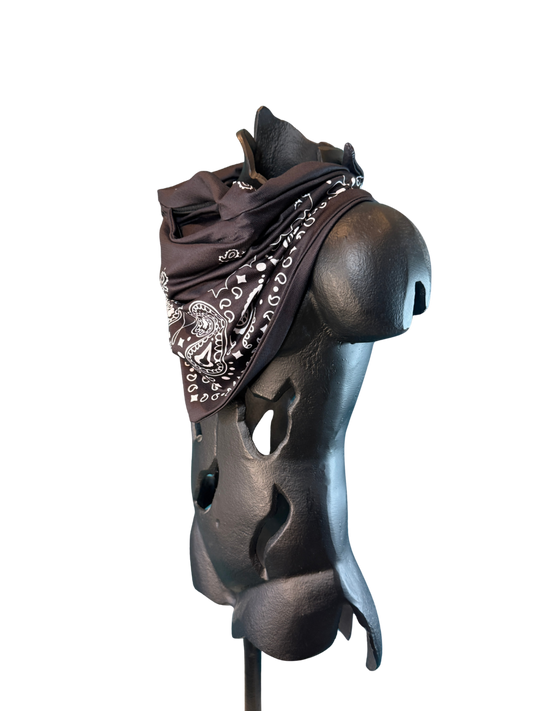
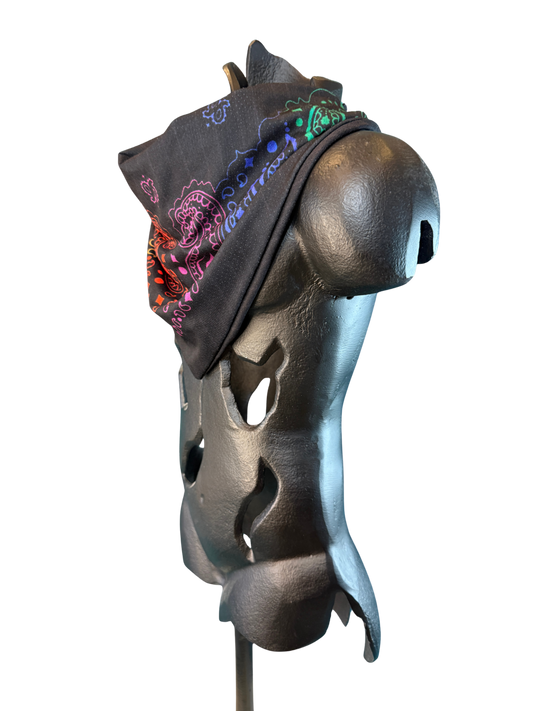
Money belts work, but let's be real — they look ridiculous and they're uncomfortable. The best hidden storage is stuff you'd wear anyway. A bandana with a hidden zippered pocket, for example, looks like a normal accessory but can hold folded cash, a card, and a room key. Nobody's trying to pickpocket your neck scarf. Something like the Stuffy Fox bandana works because it's genuinely inconspicuous — it just looks like you have decent style, not like you're hiding something.
5. Be Extra Alert During Transitions
Getting on/off trains, entering/exiting attractions, walking through turnstiles — these transition moments are when pickpockets strike most. Your attention is split, your hands are busy, and crowds create cover. Lock in during these moments.
6. Wear Your Bag in Front on Transit
Crossbody bags worn to the front. Backpacks on your chest in crowded spaces. Yes, you might look a little goofy. You'll look goofier filing a police report.
7. Don't Flash Expensive Electronics
Pulling out your $1,200 phone for photos is unavoidable. But sitting at a cafe scrolling with it on the table next to the street? That's advertising. Be aware of when your valuables are visible and to whom.
8. Avoid the "Tourist Uniform"
Pickpockets look for easy-to-identify tourists. The more you blend in, the less you're targeted. This doesn't mean you need to pretend to be local. Just don't wear the fanny pack, cargo shorts, and "I Heart Paris" shirt combo.
9. Keep Your Hand on Your Valuables in Crowds
When you're in a packed metro car or a dense crowd, put your hand in the pocket that holds your phone or wallet. Or rest your hand on your bag's zipper. Physical contact is the simplest alarm system.
10. Be Skeptical of Unsolicited Approaches
If a stranger approaches you in a tourist area — especially if they're overly friendly, pushy, or creating some kind of unusual situation — your awareness should spike. Not every friendly person is a thief, but pickpockets rely on social engineering. A polite "no thanks" and walking away costs you nothing.
11. Never Leave Bags Unattended or on Chair Backs
At restaurants and cafes, keep your bag on your lap, between your feet (with a strap around your leg), or on a hook under the table if one exists. Never on the back of your chair, and never on the floor behind you.
12. Use Zippers and Closures, Not Open Pockets
Open tote bags and purses with magnetic clasps are easy targets. Zippers require more effort and create more friction — both things pickpockets want to avoid. If your day bag doesn't zip, get one that does.
13. Know the Scams Before You Arrive
Spend 15 minutes researching the specific scams common to the city you're visiting. Paris has the ring scam and the bracelet scam. Barcelona has the three-card monte crews. Rome has the gladiator photo hustlers. Knowing the playbook makes you dramatically harder to fool.
14. Lock Your Phone Down
Enable Find My iPhone / Find My Device. Set up a lock screen. Back up your photos to the cloud daily. If your phone does get stolen, you want to be able to track it, lock it, and not lose your entire trip's worth of photos.
15. Travel With Less
The less you carry, the less you can lose. Going out for dinner? You probably need one card, some cash, your phone, and your room key. You do not need your passport, three credit cards, and $400 in mixed currency. Leave what you don't need in the hotel safe.
This is another spot where wearable hidden storage shines. If all you need for the evening is a card, some cash, and a key, a Stuffy Fox bandana holds exactly that — and you don't even need to bring a bag. One less thing to watch, one less thing to worry about.
What to Do If You Get Pickpocketed
Even with the best preparation, it can happen. If it does:
Immediately
- Check what's missing. Do a full inventory — phone, wallet, cards, passport, cash.
- If your phone is gone, use Find My Device from a friend's phone or a computer at your hotel to track, lock, or erase it.
- Call your bank and freeze your cards. Most banking apps let you do this instantly if you have access to another device.
Within a Few Hours
- File a police report. You may not get your stuff back, but you need the report for insurance claims and for replacing a stolen passport.
- Contact your embassy if your passport was taken. They can issue emergency travel documents.
- Let your hotel know — they may have seen something, and they can help you access emergency services.
The Silver Lining
Losing stuff sucks. But it's just stuff. You're in Europe. The trip doesn't have to be ruined. Cancel the cards, replace the phone when you get home, and go eat some pasta. You'll have a great story in six months.
The Mindset Shift That Makes the Biggest Difference
Here's the real key: you don't need to be un-pickpocketable. You just need to be harder to pickpocket than the person next to you.
Pickpockets are rational operators. They're looking for the easiest mark, not the most challenging one. If you're carrying a zipped crossbody bag, keeping your hand on your pocket, and staying aware of your surroundings, they'll move on to someone easier. That's it. That's the whole game.
Travel smart, stay loose, don't let paranoia ruin your trip — and keep your important stuff somewhere nobody would think to look. Your future self, standing in front of the Colosseum with all their belongings intact, will thank you.
Safe travels out there.